Crafting Your Fantasy Realm: Integrating the Throne Room Pack into Your Creative Process
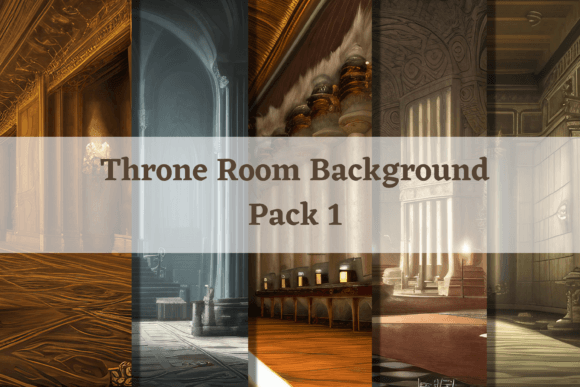
Building a cohesive and compelling visual world requires more than just inspiration; it requires reliable assets that integrate seamlessly into a professional workflow. Fantasy Backgrounds Throne Room Pack 1 is a set of five high-resolution, whimsical fantasy throne room illustrations designed for exactly that purpose. It provides not just a single image, but a thematic toolkit. Understanding how this asset pack functions within the broader process of project creation is key to leveraging its full value, transforming it from a simple purchase into a foundational component of your creative execution.
The Role of Asset Packs in a Structured Workflow
For creators, whether designing a book cover, developing a tabletop game, or producing social media content, the early phases of a project often involve resource assembly. This is where Fantasy Backgrounds Throne Room Pack 1 finds its primary entry point. Before diving into detailed design or narrative development, gathering visual assets that define the aesthetic tone is a critical preparatory step. This pack offers a resolved, consistent style across five distinct scenes, eliminating the need to source or create multiple disparate backgrounds. By securing a compatible asset pack at the outset, you establish a visual constraint that paradoxically fosters creativity, providing a unified stage upon which to build your unique elements.
The technical specifications of the pack—2048x2048 pixels, 72 DPI, PNG format—are not arbitrary details but practical considerations for integration. The resolution ensures suitability for both digital displays and print mediums like book covers or greeting cards, offering flexibility as your project scope evolves. The PNG format, with its support for transparency, is universally compatible with any standard graphics software, from Adobe Photoshop and Illustrator to free alternatives like GIMP or online design platforms. This compatibility removes a potential technical barrier, allowing the assets to plug directly into your existing software environment without conversion or special handling.
Integration Across Diverse Use Cases and Mediums
The utility of Fantasy Backgrounds Throne Room Pack 1 extends across its advertised applications, but the integration method varies by medium and professional role.
For Publishing and Graphic Design
A book cover designer or graphic artist might use one of the throne rooms as a primary background layer. The workflow here involves selecting the image that best matches the narrative’s mood—perhaps a grandiose, sunlit hall for an epic fantasy, or a shadowy, ornate chamber for a darker tale. The high-resolution file allows for cropping, zooming, and overlaying text and other graphics without loss of quality. This asset serves as a fixed, high-quality base, upon which the designer executes the more variable and custom elements: title typography, author names, and perhaps character artwork. It provides immediate depth and context, significantly accelerating the composition phase.
For Content Creation and Digital Marketing
Bloggers, educators, or social media managers can integrate these images into their content creation pipeline to establish a fantasy theme. A blogger writing about medieval history or fantasy literature might use an image as a striking header graphic or within a post to break up text. The process involves downloading the pack, storing it in an organized digital asset library—perhaps categorized under "Fantasy/Backgrounds"—and then pulling the relevant file when drafting new content. This promotes brand or thematic consistency across multiple posts or campaigns. For a small business owner in the tabletop gaming niche, these images could be used directly in product listings for custom cards or invitations, or as atmospheric backgrounds for promotional videos, adding professional flare with minimal production time.
For Inspiration and Artistic Reference
For illustrators and hobbyists, the pack’s role shifts from a final asset to a starting point. An artist might use the whimsical architectural details—the curves of a throne, the pattern of a mosaic floor—as reference for their own original illustration. The workflow here is more observational and analytical. The artist studies the lighting, perspective, and stylistic choices within the provided images to inform their personal technique. This use case underscores the pack’s value beyond direct implementation; it serves as a learning and inspiration tool, seamlessly fitting into the research and development phase of an artistic project.
Practical Implementation for Long-Term Efficiency
To truly integrate Fantasy Backgrounds Throne Room Pack 1 into your routine, consider its management and application from an efficiency standpoint.
Upon download, immediately organize the files. Create a dedicated folder within your project asset directory. Rename the files descriptively if the default names are generic (e.g., "Throne_Room_Sunlit.png", "Throne_Room_Shadowed.png"). This simple step saves time during future searches and maintains order across multiple projects. Given that the pack contains only five images, it is manageable, yet its focused theme means it can be reused across different projects requiring a similar aesthetic, ensuring a return on investment over time.
When using the images, leverage their uniformity for quality control. If you are creating a series of blog posts or a suite of greeting cards, using different backgrounds from the same pack guarantees a consistent visual quality and style. This eliminates the variable of sourcing multiple artists or styles, which can lead to a disjointed final product. The pack acts as a quality anchor.
Workflow Example: Developing a Tabletop Game Campaign
A game master planning a new campaign might use these images in several integrated stages. First, during the planning phase, they could select a throne room image to represent a key location for their players, using it as a visual aid in campaign notes or a shared online document. During execution, the image could be printed for physical reference at the table or displayed on a digital screen during play. After the session, the same asset could be used in a recap blog post or social media update to engage the community. Here, one asset flows through the entire project lifecycle: pre-production, live execution, and post-session documentation, demonstrating a fluid integration into a multi-stage process.
Complementing Other Tools and Resources
Fantasy Backgrounds Throne Room Pack 1 does not exist in isolation. It interacts with other elements of your toolkit. In graphic design, it will be layered with typography and logo assets. In digital content creation, it might be combined with stock photo elements of characters or objects placed atop the background. In tabletop gaming, it could be paired with custom-made character tokens or rule documents. Its value is often realized in combination.
Therefore, when planning a project, consider how this background pack will relate to your other assets. Does its color palette complement your brand colors? Does its whimsical style match the tone of your other illustrations or fonts? Making these decisions during the project’s planning phase ensures a harmonious final composition. The throne room backgrounds provide a stable foundation, but the final masterpiece is built through the integration of all your chosen components.
Ultimately, Fantasy Backgrounds Throne Room Pack 1 is a practical solution for creators who value both inspiration and efficiency. By understanding its place within a structured workflow—from initial resource gathering to final implementation across diverse mediums—you can move beyond simply using an image to truly embedding a versatile asset into your creative process. It offers a bridge between the whimsy of fantasy and the practical demands of professional execution, allowing you to build your visions on a foundation of ready-made, high-quality artistry.