The Ultimate Gaming Lifestyle Statement: Eat Sleep Game Repeat
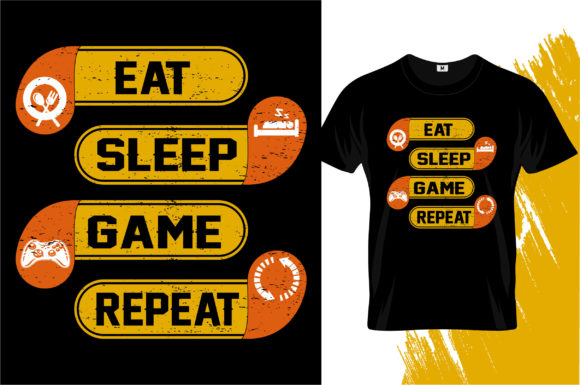
For gamers, the phrase "Eat Sleep Game Repeat" is more than a catchy slogan; it's a badge of honor, a succinct summary of a passion-driven lifestyle. When that phrase is translated into a sharp, versatile graphic design like Eat Sleep Game Repeat T-shirt Design 2, it becomes a powerful tool for expression, merchandise, and branding. This design package, offering high-resolution vector files, is a treasure trove for creators, entrepreneurs, and fans looking to produce quality apparel or products. However, the path from downloading a ZIP file to a successful final product is where many stumble on common, costly pitfalls.
Understanding the Design Asset Package
First, let's clarify what you're actually getting. Eat Sleep Game Repeat T-shirt Design 2 isn't just a single image. It's a professional design system delivered as vector source files (AI/EPS) and a high-quality PNG. The key features—100 vector shapes, easy color changeability for dark backgrounds, and scalability—mean the design is engineered for flexibility. You can adapt it for a black t-shirt, a white mug, a neon poster, or a detailed sticker without losing quality. This is the core value: a ready-to-print, adaptable asset. People are interested because it saves immense design time, offers professional quality, and serves a massive market of gaming enthusiasts.
Overlooked Details in File Management and Preparation
A frequent and immediate mistake is mishandling the delivered files. The package is compressed in a ZIP file. It’s tempting to rush, but failing to properly extract all contents using a tool like WinRAR or simply your operating system's built-in extractor can lead to confusion. You might only see the PNG and think the vector files are missing. Always extract the entire ZIP folder and inspect its contents. You should locate the EPS or AI source file—this is your gold standard for editing and scaling.
Another misunderstanding revolves around the "300 dpi" specification for the PNG. DPI (dots per inch) is crucial for print quality. This high-resolution PNG (4500x5400 at 300 dpi) is perfect for large-format prints like posters. However, using it for a web-only thumbnail would be wasteful—the file size would be enormous. Conversely, trying to use a low-resolution web image for a t-shirt print will result in a blurry, pixelated mess. Match the file to its purpose: use the scalable vectors for most print setup and the high-res PNG for specific raster needs.
Critical Mistakes in Color Adaptation and Application
The design highlights easy color changeability for dark t-shirts. This is a fantastic feature, but it’s often misinterpreted. "Easy change" means the vector design is constructed with shapes that are simple to recolor in software like Adobe Illustrator or even free alternatives like Inkscape. It doesn't mean the colors will automatically invert perfectly for every dark background. A common error is assuming a design made for a white shirt will look identical on a black shirt just by changing the shirt color in an online mockup tool. The contrast relationship changes.
For example, if the design uses thin, light-colored outlines, placing it on a dark garment might make those lines appear too faint. You must actively check the contrast. Open the EPS file, change the background canvas to a dark color, and adjust the design elements accordingly—perhaps making outlines slightly thicker or choosing a brighter accent color. This proactive tweaking ensures the final printed product remains bold and legible. Don't just rely on automated previews from print-on-demand sites; verify the actual modified file.
Resizing and Quality Preservation
The "100 vector shapes re-sizable" claim is true, but there's a caveat. Vector graphics are infinitely scalable without quality loss, but this only holds if you use the vector source files (AI/EPS) in compatible software. A major mistake is resizing the PNG file. If you stretch that PNG to fit a mug template, you are degrading its resolution. Always provide your printer or production platform with the original vector file or a new PNG exported from the vector file at the exact required dimensions. This guarantees sharp edges and perfect clarity on any product, from a small sticker to a large poster.
Choosing the Right Product and Print Method
The design is ready for t-shirts, mugs, apparel, and more. However, not every print method works for every product. A overlooked detail is the print technique. For apparel, understand the difference between direct-to-garment (DTG) printing and vinyl/screen printing. DTG is excellent for complex, multi-colored designs like this one, especially on light garments. For dark garments, DTG often requires a white underbase layer, which can affect the feel and look of fine details. Screen printing might be better for bulk orders on dark shirts but requires color separation. Check with your printer about the best method for your chosen product and garment color.
Furthermore, applying the design to items like mugs or posters requires checking the specific print area dimensions and curvature. A design that looks great flat might have key elements distorted on a curved mug surface. Before committing to a large order, request a physical proof or a detailed digital mockup that accounts for the product's shape. This avoids the disappointment of a great design being partially cropped or warped.
Legal and Commercial Considerations
Many hobbyists and small business owners dive into using such designs without considering licensing. While this design is typically offered for commercial use, you must always verify the license terms provided by the seller. Can you use it for unlimited commercial products? Are there restrictions on reselling the digital file itself? Assuming you have full rights without checking can lead to legal issues. Also, while the phrase is popular, ensure your use doesn't inadvertently infringe on any existing trademarks in your region for specific merchandise categories. Doing this basic due diligence protects your venture.
A Practical Checklist Before You Begin
To avoid these pitfalls, follow this constructive approach before using Eat Sleep Game Repeat T-shirt Design 2.
- Extract and Audit: Unzip the entire folder. Confirm you have the EPS/AI vector file, the PNG, and any instruction files.
- Software Ready: Ensure you have access to software that can open and edit vector files (Illustrator, Inkscape, CorelDRAW) for color changes.
- Define Your Product: Decide exactly what you're making (black t-shirt, ceramic mug, vinyl sticker). This dictates your next steps.
- Adapt for Context: Open the vector file. Simulate your final product's background color and adjust the design elements for optimal contrast and clarity. Export a new file tailored to that product.
- Consult Your Producer: Talk to your chosen printing service. Provide them your tailored file and ask about recommended print methods, file formats, and proofing options for your specific product.
- Verify License: Re-read the design's usage license to confirm commercial production is permitted for your intended scale.
By treating this design package as a professional starting point—not a finished, one-click solution—you unlock its true potential. The effort you put into proper file handling, context-specific adaptation, and printer collaboration directly translates into the quality, satisfaction, and commercial success of your final Eat Sleep Game Repeat merchandise. It turns a great graphic into a flawless product that truly celebrates the gaming lifestyle.