The Ultimate Digital Design Toolkit: Understanding Digital Wall Patterns and Download Files
In today’s digital landscape, visual content reigns supreme. Whether you’re designing a website, creating marketing materials, or crafting a personal art project, the foundation of any great design often begins with its background. This is where the concept of digital wall patterns comes into play. Far more than just simple images, they are versatile, high-quality assets that serve as the building blocks for countless creative endeavors. If you’ve encountered terms like “Digital Wall Pattern Download Files” or collections boasting “20 Digital Pattern Paper High Quality 3000×2000 JPEG files,” you’ve stumbled upon a modern designer’s treasure trove. This article will demystify these resources, exploring their purpose, significance, and immense practical relevance across various fields.
What Exactly Are Digital Wall Patterns?
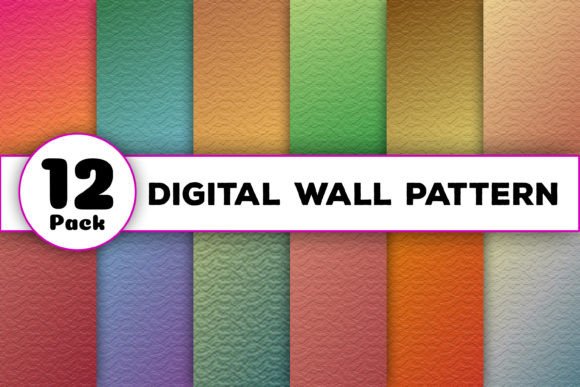
Let’s start from the ground up. A digital wall pattern is a repeating or standalone design element saved in a digital file format—most commonly JPEG, but also PSD, PNG, or others. These patterns are not physical wallpaper for your home; instead, they are “wallpaper” for your digital canvases. Think of them as the textured paint, the elegant fabric, or the artistic backdrop for anything you create on a screen. The key specifications often highlighted—such as 3000×2000 pixels, 300 DPI, and JPEG format—are critical indicators of quality and usability.
A resolution of 3000×2000 pixels means the image is large enough to cover most desktop monitors and digital displays without stretching or pixelating. The 300 DPI (dots per inch) specification is a benchmark for print-quality, ensuring that if you use these patterns for physical items like greeting cards, wrapping paper, or wedding invites, they will look crisp and professional. The JPEG format offers a balance of high quality and manageable file size, making it a versatile choice for both web and print applications. These patterns come in an astonishing variety: from metallic finishes and stone paper textures to abstract art, watercolor splashes, polygonal shapes, and elegant gradients.
The Core Purpose and Significance
The primary purpose of these digital assets is to provide a ready-made, high-quality visual foundation. Their significance lies in their ability to save time, inspire creativity, and elevate the professionalism of any project. For a small business owner designing a website, using a premium HD pattern wallpaper as a background can instantly create a sense of modernity and trust. For a hobbyist into scrapbooking, downloadable digital paper with realistic paint texture or brush strokes can transform a simple album into a work of art. In education, teachers can use these colorful, engaging patterns to create visually compelling presentations or learning materials.
A common misunderstanding is that using pre-made patterns is uncreative or “cheating.” This is a false assumption. Just as a painter uses quality brushes and canvas, a digital creator uses quality assets. These patterns are tools. They provide a starting point, a texture, a mood—upon which limitless personal creativity can be layered. They democratize design, allowing individuals without advanced graphic software skills to access beautiful visuals.
The Practical Relevance in Modern Life and Work
How do these digital wall pattern files fit into our daily activities? Their relevance is vast and touches numerous domains.
For Business and Branding
In the business world, visual consistency is key to building a brand identity. A collection of clean, modern patterns can form the visual backbone of a company’s identity. They can be used across website backgrounds, social media graphics, email newsletters, and printed brochures. The descriptors “Premium” and “most sell” often attached to these collections speak directly to their commercial appeal. A simple, flat pattern might convey minimalism and efficiency, while a colorful, splash pattern could evoke energy and innovation.
For Creativity and Personal Projects
Beyond business, these files fuel personal creativity. The listed keywords—scrapbook paper, birthday party, wedding invites—are direct applications. Imagine designing custom wrapping paper for a gift using a beautiful watercolor texture file. Or creating unique desktop backgrounds and gaming backgrounds that reflect your personal style. The availability of realistic textures like stone or metallic allows for crafting digital art that feels tactile and authentic.
For Technology and Digital Interfaces
In technology and UI/UX design, background patterns are crucial for creating engaging user experiences. A subtle, hq background on an app interface can reduce eye strain and improve readability. The “web psd” mention hints at assets tailored specifically for web designers, often including layered files for more custom manipulation. Patterns provide depth and context without overwhelming the primary content on a screen.
What Makes a Collection Like "20 Digital Pattern Papers" So Useful?
When you see an offer for a bundle of 20 or more patterns, it represents a curated toolkit. This variety addresses a fundamental need in creative work: choice and coherence. Having multiple patterns in the same high-quality specification (3000×2000, 300DPI, JPEG) means you can maintain consistency across a multi-page website or a series of product packages. For example, you might use a gradient pattern for your homepage, a matching polygonal pattern for your contact page, and a complementary abstract pattern for your blog headers.
The inclusion of diverse styles—from paint strokes background to simple geometric designs—ensures you have the right tool for different emotional tones or project requirements. A beautiful, colored pattern might be perfect for a children’s birthday invite, while a clean, metallic texture might suit a corporate report cover. This versatility is why such collections are often tagged as the “best backgrounds” or “most beautiful backgrounds.” They are designed to cater to a wide range of tastes and needs, maximizing their practical utility.
Clarifying Key Terms and Formats
To build a broader understanding, let’s clarify some recurring terms:
- 300 DPI: This is a print-resolution standard. DPI stands for “dots per inch.” A 300 DPI image has enough density of information (dots) to print clearly at a high quality, essential for physical outputs.
- JPEG vs. PSD: JPEG is a final, compressed image format, excellent for sharing and using. “PSD” refers to Adobe Photoshop’s native format, which can contain layers and editable elements, offering more flexibility for advanced users.
- HQ (High Quality) & HD (High Definition): These terms emphasize the clarity, sharpness, and lack of distortion in the images, crucial for both large digital displays and print.
- Pattern Textures: This refers to patterns that mimic real-world textures like paint, stone, or water, adding a tactile feel to digital work.
Understanding these specifications helps you select the right files for your project and avoid the common pitfall of using a low-resolution web image for a print project, which would result in a blurry, unsatisfactory product.
Integrating Digital Wall Patterns into Your Projects: Examples and Best Practices
How do you move from downloading these files to actually using them? Let’s explore some natural examples.
Example 1: Enhancing a Personal Blog. You run a travel blog. You download a collection that includes watercolor texture and gradient files. You use a soft watercolor pattern as the overarching background for your website, creating an inviting, artistic vibe. For individual post headers about different destinations, you use different gradient patterns that match the color scheme of each country (e.g., blue gradients for seaside posts, green gradients for forest adventures). This creates a cohesive yet dynamic visual experience.
Example 2: Crafting a Wedding Suite. You’re designing your own wedding invitations, menus, and place cards. A collection with metallic, paint texture, and simple patterns is ideal. You might choose an elegant gold metallic pattern for the formal invitation, a softer paint stroke background for the dinner menu, and a clean, simple white-and-grey pattern for the practical place cards. Because all files are 300 DPI, you can print them professionally, and the consistent style tells a unified visual story for your event.
Best Practices for Use:
- Match the Mood: Select a pattern that aligns with the emotional tone of your project—energetic, serene, professional, playful.
- Consider Context: For web use, ensure the pattern isn’t too busy behind text. For print, verify the DPI is sufficient.
- Don’t Overcrowd: Often, a pattern is a supporting element. Let it enhance your primary content, not compete with it.
- Customize: Even with ready-made files, you can adjust colors, overlay text, or combine elements to make them uniquely yours.
The Broader Impact: Accessibility and Empowerment in Design
The availability of downloadable, high-quality digital wall pattern files represents a significant shift in creative accessibility. It empowers entrepreneurs, educators, artists, and hobbyists by providing them with professional-grade assets at minimal cost. This aligns perfectly with the principles of helpful content and E-E-A-T (Experience, Expertise, Authoritativeness, Trustworthiness): these resources are created by experienced designers (Expertise), offered as reliable, high-specification files (Trustworthiness), and enable users to build their own experiential knowledge (Experience) by applying them in real-world projects.
In conclusion, digital wall patterns and their downloadable collections are far more than just background images. They are foundational tools for digital and physical design, bridging the gap between professional aesthetics and accessible creation. By understanding their specifications, purposes, and applications, you can harness their power to elevate your website, enrich your personal projects, and add a layer of polished creativity to your work and daily life. Whether you need a realistic texture for a mock-up, a colorful splash for a party, or a clean, modern pattern for your brand’s visual identity, these digital assets provide the quality and variety to bring your vision vividly to life.